

Some partnerships are planned. Others happen because of a few random connections, a shared history, and a little bit of luck.
For Sean Simonds, his relationship with Asheville City SC started with a conversation that got surprisingly personal. Not long after opening his practice in Asheville, Sean was introduced to one of the club’s owners. During their conversation, the owner asked if Sean had grown up in Pennsylvania. He had. Then came another question: Was his dad a doctor? Also yes. Sean’s father had been a neurosurgeon.
Then the conversation got even more interesting. The owner asked Sean about a family they had both known back in Pennsylvania, people Sean hadn’t spoken to in 15 or 20 years. As it turned out, the owner’s fiancée had been college roommates with one of the family’s children, and they had just visited their house a couple of nights earlier. When the family heard Sean was coming to Asheville and getting involved with a new soccer club, they told him he needed to meet Sean.
It’s a pretty small world.
The conversation eventually turned to soccer, the new club, and what was happening in Asheville. Sean didn’t think much more would come of it until he got a call about a week later. And, well, the rest is history.
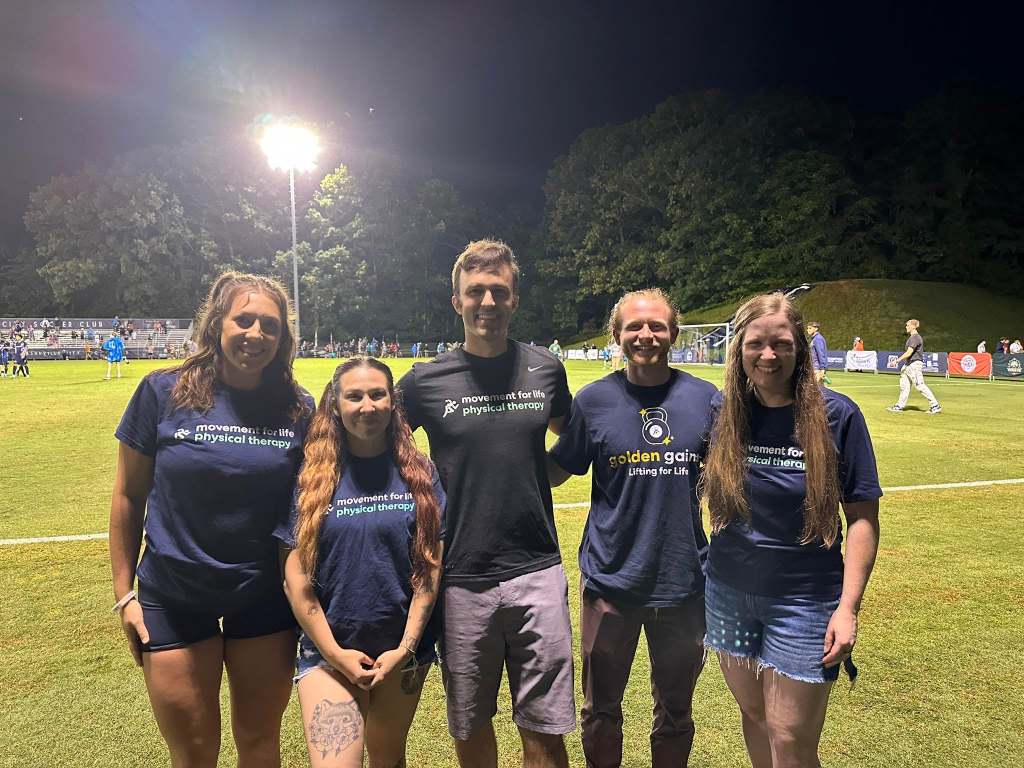
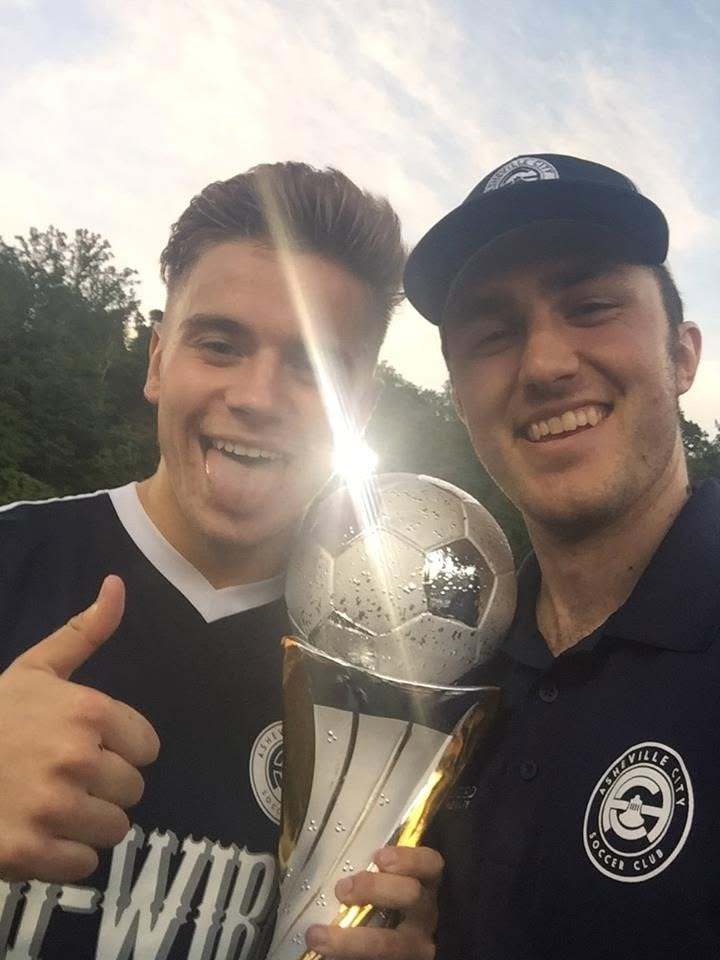
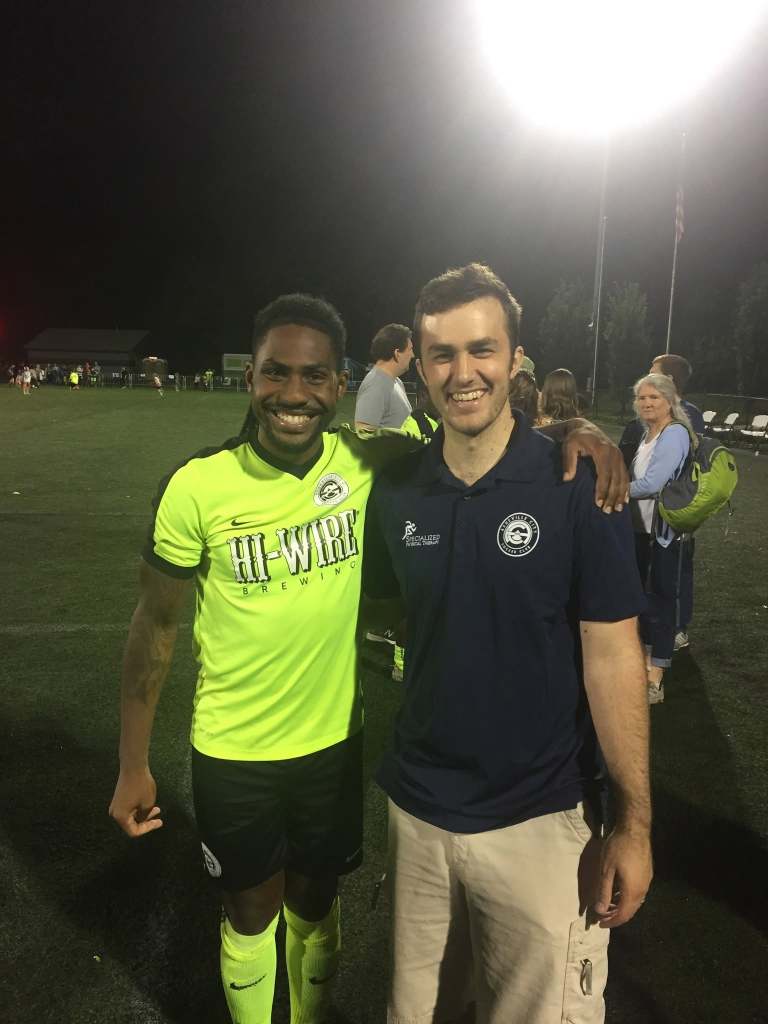
Today, Simonds is the Clinic Director at Movement for Life Physical Therapy and has been part of Asheville City SC since the club’s first season.
“I didn’t think I’d ever hear from them again,” Simonds said. “They called me back about a week later, and it’s been awesome ever since.”
Taking Care of the Blues
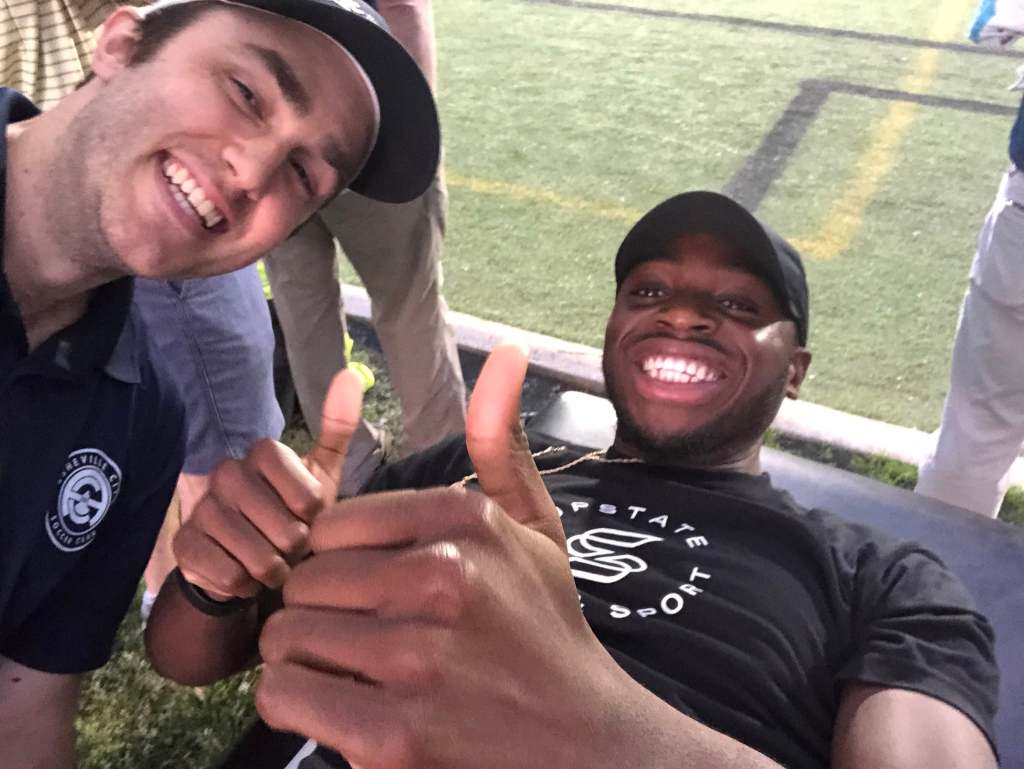
Asheville City has a lot of people working behind the scenes to keep players healthy, and Simonds has been part of that group since the beginning. As the club’s team physical therapist, he works closely with the athletic training staff and physicians throughout the season. You’ll find him on the sideline during matches, helping assess injuries and figure out what a player needs. During the week, he’s working with players on recovery, treating minor injuries, and helping them get back to full participation safely. There’s also a lot of preventative work happening along the way, because ideally, you want to keep players healthy before an injury becomes a problem.
Movement for Life Physical Therapy also works closely with HF Center of Exercise Science, another longtime partner of the club, to manage player health and performance. The two groups have different responsibilities, but there’s a lot of communication between them, especially during the season. Movement for Life focuses more on injuries, treatment, and rehabilitation, while HF handles much of the players’ fitness and conditioning work.
“Ronnie and I communicate almost daily, probably more than daily during the season,” Simonds said. “We’re managing the players and seeing who’s ready to go back out, who’s ready to do some fitness work with him to go back out on the field.”
That communication matters. When you’re working with athletes who are training and playing at a high level, everyone needs to know what’s going on.
More Than Game Day
Of course, Asheville City isn’t the only group keeping Simonds busy. Movement for Life works with just about everyone. That includes young athletes, recreational athletes, ultramarathoners, former professional athletes, and people approaching 100 years old. Some people are looking to get back to the sport they love, while others just want to be able to move a little easier in their everyday lives.
Simonds has been at the Asheville location for 11 years and has helped build a team that offers much more than traditional physical therapy. Along with orthopedic rehabilitation and preventative care, Movement for Life offers personal training, group classes, bike fitting, and VO2 max testing.
The VO2 max testing is especially interesting for anyone who wants to get more out of their training. The test measures how efficiently your body uses oxygen during exercise. Patients run on a treadmill or ride a bike while wearing a specialized mask that tracks oxygen and carbon dioxide levels. From there, the results can help give a clearer picture of cardiovascular fitness and help create a more specific training plan.
It’s something you might expect to see with professional athletes, but you don’t have to be a professional athlete to benefit from it. Simonds has worked with everyone from people trying to get back into exercise after COVID to athletes looking for ways to improve their performance. The idea is pretty simple: Instead of guessing about what your body is doing, you can actually get some information to work with.
And Simonds has the background to understand both sides of that equation. He earned his undergraduate degree in Kinesiology and Exercise Science from James Madison University before completing his Doctorate in Physical Therapy at St. Francis University in 2010. He later completed a residency in Orthopedic Physical Therapy through a partnership between Movement for Life and the University of Southern California, earning his Board Certified Orthopedic Clinical Specialist credential. He’s also a Certified Strength and Conditioning Specialist, with a particular interest in sports performance, injury prevention, and helping athletes stay on the field. That interest has even led him to publish a book on cruciate ligament injury prevention in athletes.
Taking Care of the Next Generation
Another big part of Movement for Life’s work is helping young athletes stay healthy. Simonds works with a lot of youth soccer players in the Asheville area, and he’s noticed a pretty significant change in what is being asked of young athletes today.
Kids are training more, playing multiple sports, and sometimes squeezing several practices into the same day. Today’s young athletes are stronger, faster, and better trained than ever, but that doesn’t mean their bodies are always getting the recovery time they need.
“We see a lot more youth injuries than we have in the past, just because they train more,” Simonds said. “We’re seeing younger and younger kids with ACL tears and hamstring pulls and all these things that we didn’t traditionally see.”
That’s one reason the preventative side of physical therapy is so important. Sometimes it’s helping a young athlete address a small issue before it becomes something bigger. Other times, it’s helping them work through an injury and figure out what they need to do to safely get back on the field.
Simonds has also seen a major change in how athletes prepare for games. Gone are the days of simply standing around and trying to touch your toes for 20 minutes. Today’s warmups are much more active and specific to the sport, with resistance bands, activation exercises, and movements designed to prepare athletes for what they’ll actually be doing on the field. There’s a lot more thought that goes into getting ready to play than there used to be, and it’s something Simonds has enjoyed watching change.
You Don’t Need a Referral
One thing Simonds really wants more people to know is that you don’t need a doctor’s referral to see a physical therapist in North Carolina. If something is bothering you, you can contact Movement for Life Physical Therapy directly to schedule an appointment. The same goes for its other services, including group classes and VO2 max testing.
Simonds said a lot of people assume they have to see their primary care physician first, or that going directly to a physical therapist will somehow affect their insurance. That’s not the case.
“People can just come in,” he said. “If there’s something bothering you, just walk in and ask for an appointment.”
Whether you’re a competitive athlete, a weekend runner, a cyclist, or someone who’s just tired of dealing with that nagging knee or back pain, Movement for Life works with people at all different stages and activity levels.
Part of the Blues Family
It’s pretty cool to think that a conversation connecting a few people from Pennsylvania would turn into a partnership that has lasted for the entire history of Asheville City SC. But that’s exactly what happened.
For the club, having Sean and the Movement for Life team in our corner means having people who know our players, understand the demands of the game, and have been there through the ups and downs of every season. A lot of their work happens behind the scenes, but it’s an important part of what keeps the club moving.
We’re grateful to Sean and everyone at Movement for Life for being part of the Blues family since day one, and for everything they continue to do for our players and the Asheville community.
Learn more about Movement for Life Physical Therapy and its services on the Movement for Life website.